Virtualization is a proven computing concept that dates back to the 1960s, when it was developed to divide large mainframe systems into multiple isolated computing environments. The goal was to make better use of expensive hardware by allowing several workloads to share the same physical system while operating independently.
As x86 servers became the standard platform for business computing, organizations began facing many of the same challenges that earlier mainframe environments had addressed: low hardware utilization, growing infrastructure costs, increasing management complexity, and the need for better availability. Commercial x86 virtualization technologies emerged in the late 1990s and early 2000s to address these challenges and make it practical to run multiple operating systems and applications on a single physical server.
Today, virtualization is a foundational technology used throughout modern IT environments. It is supported by numerous virtualization platforms, operating systems, cloud providers, and hardware manufacturers and is widely used to improve infrastructure efficiency, flexibility, scalability, and resiliency.
In the Beginning: Mainframe Virtualization
Virtualization was pioneered in the 1960s as a way to logically divide large mainframe computers into separate virtual machines. IBM was one of the early leaders in developing this technology. These virtual environments allowed multiple workloads and operating systems to share the resources of a single physical mainframe while remaining logically separated. Because mainframes represented a significant investment, virtualization helped organizations make more efficient use of their computing resources.
The Need for x86 Virtualization
During the 1980s and 1990s, the rapid growth of inexpensive x86 servers and client-server applications shifted much of the industry toward distributed computing. Rather than concentrating workloads on centralized mainframes, organizations increasingly deployed individual physical servers for specific applications and business functions. The widespread adoption of Windows and Linux helped establish x86 servers as the standard platform for many business applications. As the number of physical servers increased, organizations began facing new infrastructure and operational challenges. These challenges included:
- Low Infrastructure Utilization—Traditional physical server environments often dedicate an entire server to a single application or workload. Because many applications use only a portion of the server’s available processor, memory, storage, and network capacity, significant computing resources may remain unused.
- Increasing Physical Infrastructure Costs—The operational costs to support growing physical infrastructure have steadily increased. Most computing infrastructure must remain operational at all times, resulting in power consumption, cooling, and facilities costs that do not vary with utilization levels.
- Increasing IT Management Costs—As computing environments become more complex, the level of specialized education and experience required for infrastructure management personnel, and the associated costs of such personnel, have increased. Organizations spend disproportionate time and resources on manual tasks associated with server maintenance, and thus require more personnel to complete these tasks.
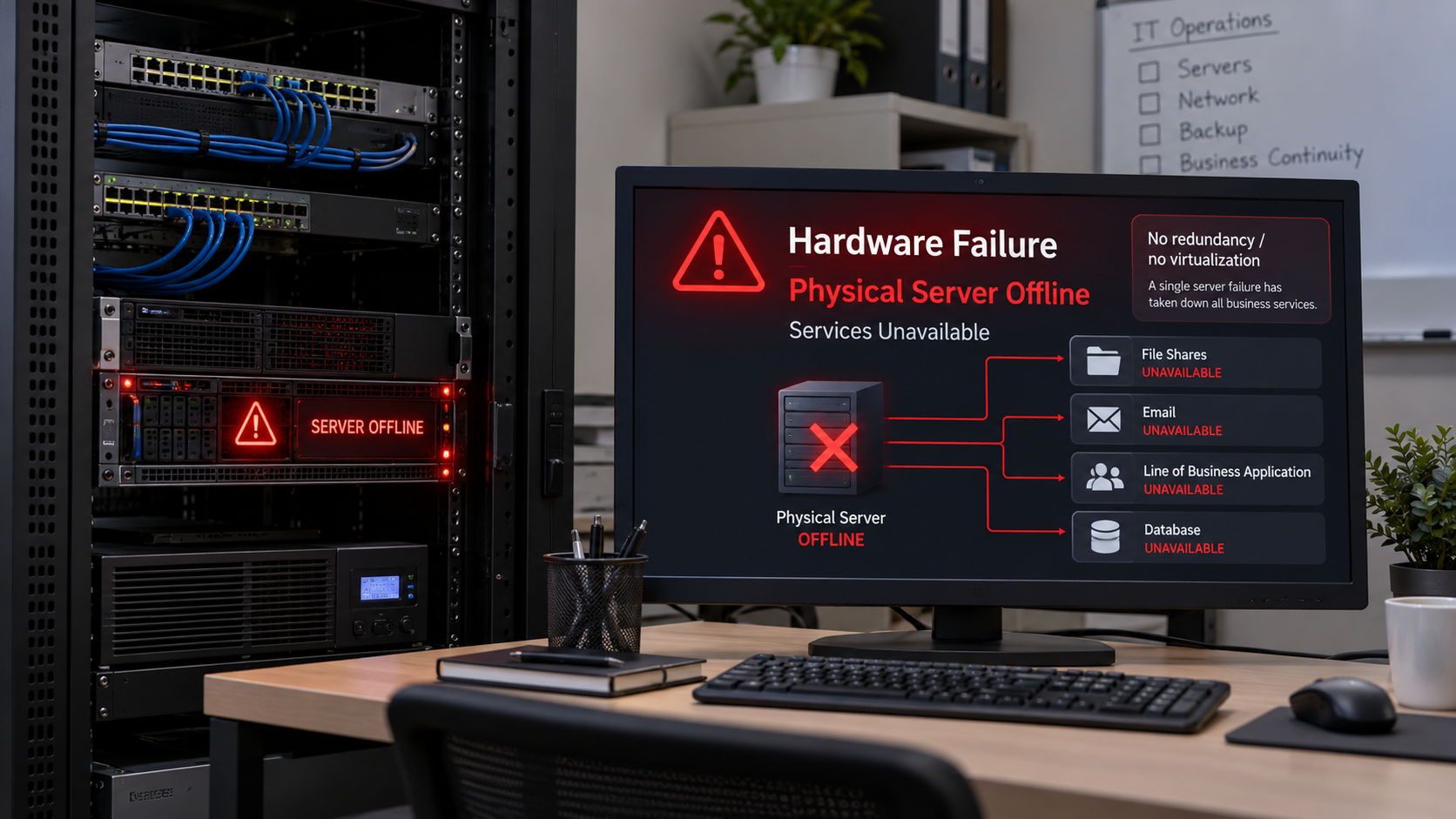
- Insufficient Failover and Disaster Protection—When critical applications are tied directly to individual physical servers, hardware failures can result in significant downtime. Organizations need reliable backup, recovery, replication, and failover strategies to maintain access to important systems and data.
- Server Sprawl—As organizations add applications and services, deploying a separate physical server for each workload can quickly increase the number of systems that must be purchased, powered, monitored, patched, backed up, and maintained.
Challenges & Obstacles to x86 Virtualization
Early x86 processors were not originally designed with virtualization as a primary requirement. Unlike many mainframe systems, the original x86 architecture contained processor behaviors and instructions that made it difficult for an operating system running inside a virtual machine to operate exactly as it would on physical hardware.
Certain sensitive processor instructions did not automatically transfer control to the virtualization layer when executed without full hardware privileges. This created significant technical challenges for early x86 virtualization systems.
To address these limitations, early virtualization platforms used techniques such as binary translation, which identified problematic instructions and replaced or translated them into sequences that could be safely executed within a virtualized environment.
Today, hardware-assisted virtualization is built into most modern server processors. Combined with modern hypervisors, high-speed storage, advanced networking, and management software, it allows virtual machines to operate with performance and capabilities that are suitable for a wide range of business-critical workloads. Advances in processor design and virtualization software eventually made x86 virtualization practical, efficient, and suitable for mainstream business workloads.
The Modern Solution: Virtualization of x86 Hardware
Modern virtualization technology allows a physical x86 server to provide computing resources to multiple independent virtual machines. Each virtual machine can have its own operating system, applications, virtual processors, memory, storage, and network interfaces while sharing the underlying physical hardware.
A software layer known as a hypervisor manages the physical hardware and allocates resources to each virtual machine. The hypervisor also provides separation between workloads so that applications running inside one virtual machine generally operate independently from applications running inside another.
Virtualization enables organizations to transform individual physical servers into flexible pools of computing resources. Instead of purchasing a separate physical server for every application, multiple workloads can operate on shared hardware while maintaining logical separation.
Depending on the virtualization platform and infrastructure design, virtual machines can also be copied, backed up, restored, replicated, moved between hosts, and provisioned much more quickly than traditional physical servers.
Why Virtualization Matters Today
Virtualization has evolved far beyond simply running multiple operating systems on one computer. It has become a core component of modern infrastructure, private clouds, public cloud services, disaster recovery solutions, testing environments, and business continuity strategies.
Organizations use virtualization to:
- Reduce the number of physical servers required.
- Improve utilization of processor, memory, storage, and networking resources
- Deploy new servers and applications more quickly.
- Simplify backup and disaster recovery.
- Improve workload portability.
- Reduce power, cooling, and facility requirements.
- Isolate applications and operating systems from one another.
- Create test and development environments without purchasing additional hardware.
- Scale computing resources as business requirements change.
- Improve availability when virtualization is combined with redundant hosts, storage, networking, and appropriate failover technologies.
Virtualization does not automatically eliminate hardware failures or downtime. A single virtualized server can still represent a point of failure if the environment does not include appropriate redundancy, backups, replication, or failover capabilities. However, when properly designed, virtualization provides organizations with significantly more flexibility in how workloads are protected, recovered, maintained, and moved between physical systems.
For many businesses, this means a more efficient infrastructure, fewer physical systems to maintain, faster recovery options, easier expansion, and a technology environment that can adapt more quickly as business needs change.